
Can a Drawing Save You £10,000? The Surprising ROI of CAD Draughting

Photo: Ania Nicholls Photography
When people think about a renovation budget, their attention naturally goes to the exciting things. The kitchen. The bathroom. The marble worktops. The lighting. The furniture. Very few people get excited about drawings. That's understandable. Drawings don't transform a space. You can't sit on them, cook on them, or admire them when guests come round. They're often one of the first costs in a project and one of the last things homeowners want to spend money on.
The problem is that drawings are often viewed as paperwork rather than protection. A set of well-prepared CAD drawings isn't there to satisfy a designer's love of organisation. It's there to answer questions before they become expensive problems. Every dimension, note, detail and specification removes uncertainty from a project, and uncertainty is expensive.
Take a fairly typical example. A homeowner approves a bespoke vanity unit before the lighting layout has been fully coordinated. When installation day arrives, the wall lights clash with the mirror cabinet. Suddenly the electrician needs to return, the joiner has to modify the cabinetry, decorating needs touching up, and the programme slips by several days. What started as a simple coordination issue can quickly cost hundreds, sometimes thousands, of pounds to put right.
The reality is that construction is one of the most expensive places to make decisions. Once trades are booked, materials are ordered and work is underway, even a seemingly minor change can have a surprisingly large financial impact. Moving a light switch on a drawing takes seconds. Moving it after plastering, decorating and electrical works have been completed could involve additional labour, materials, redecoration and return visits from multiple trades.
That's why experienced interior designers spend so much time on planning and documentation. They're not producing drawings for the sake of creating paperwork. They're identifying problems while they're still easy, quick and relatively inexpensive to solve.
Of course, drawings aren't a magic wand. Even the most detailed set of interior design documentation can't predict every site condition or eliminate every unforeseen issue. Older properties, hidden services and structural discoveries can still create surprises during a renovation. What good documentation does do is significantly reduce avoidable mistakes and ensure that the vast majority of decisions have already been thought through before work begins.
The irony is that the drawings themselves are often one of the smallest line items in a renovation budget. Yet they're frequently the thing standing between a smooth project and a long list of costly changes, delays and compromises.
Why Interior Design Documentation Is Often Overlooked
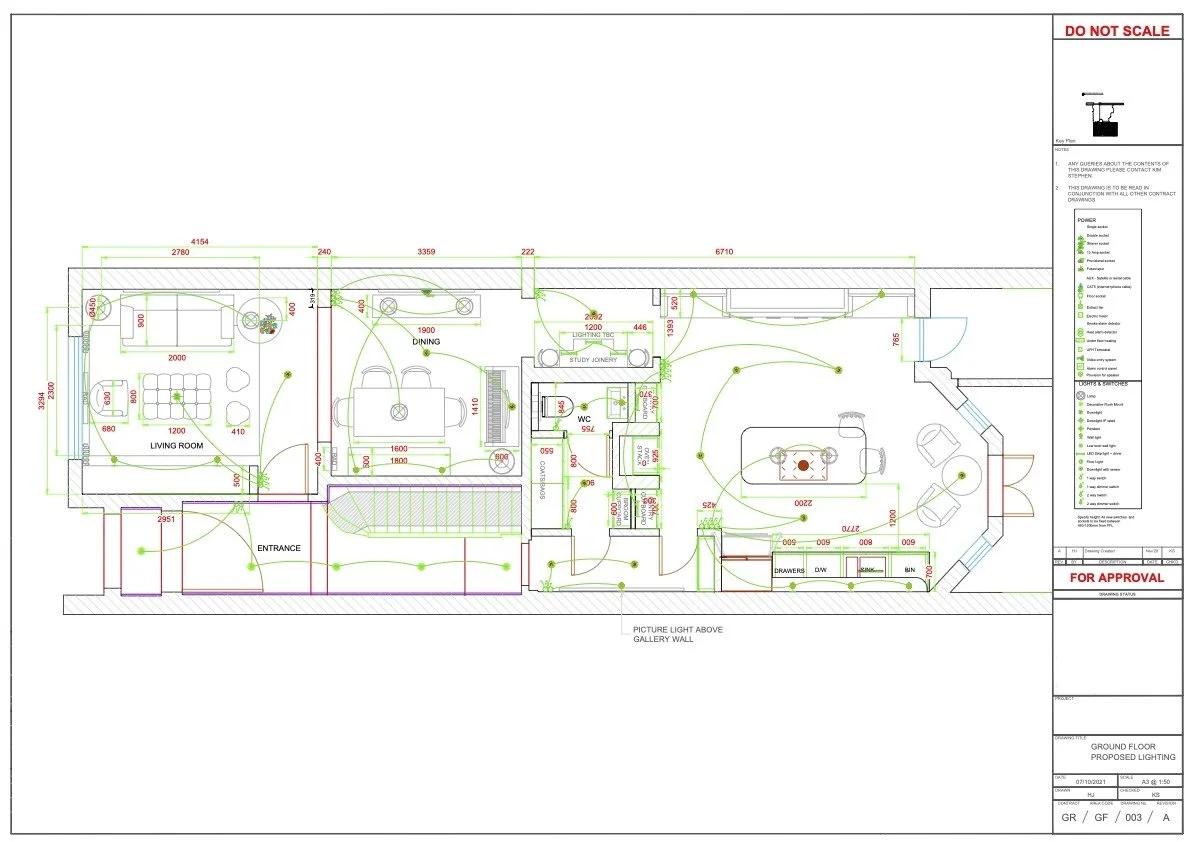
Photo: Unsplash Евгений Дмитриев
Part of the challenge is that good interior design documentation is invisible when it's working well. Nobody walks into a completed home and says, "What excellent electrical coordination."
Instead, they notice that the lighting feels right. The furniture fits perfectly. The kitchen functions effortlessly. The bathroom works exactly as expected.
What they don't see are the hundreds of decisions that were resolved months before construction started. Many homeowners assume builders will simply work things out on site. In fairness, experienced contractors solve problems every day, but every time a contractor has to make a design decision during construction, there's an opportunity for something to be interpreted differently than intended.
That doesn't mean anyone is doing a bad job, it simply means people are filling in gaps, and gaps are where mistakes happen.
The Real Cost of Making Decisions During Construction
Imagine a bespoke vanity unit is being installed in a bathroom. The drawings don't show the exact position of the wall lights. Nobody notices until installation day that the lights clash with the mirror cabinet. Now the electrician needs to return, the joiner may need to modify the cabinetry, decorating may need touching up, the programme slips, additional costs start appearing.
The original issue wasn't the installation, it was the missing information. This happens across every area of a renovation; Lighting layouts, furniture clearances, tile setting out, joinery details, plumbing positions, appliance coordination and countless other elements all rely on clear information. The later a problem is discovered, the more expensive it becomes to solve. A £200 problem during planning can easily become a £2,000 problem on site.
How CAD Drawings Reduce Risk & Improves Budget Control During a Renovation
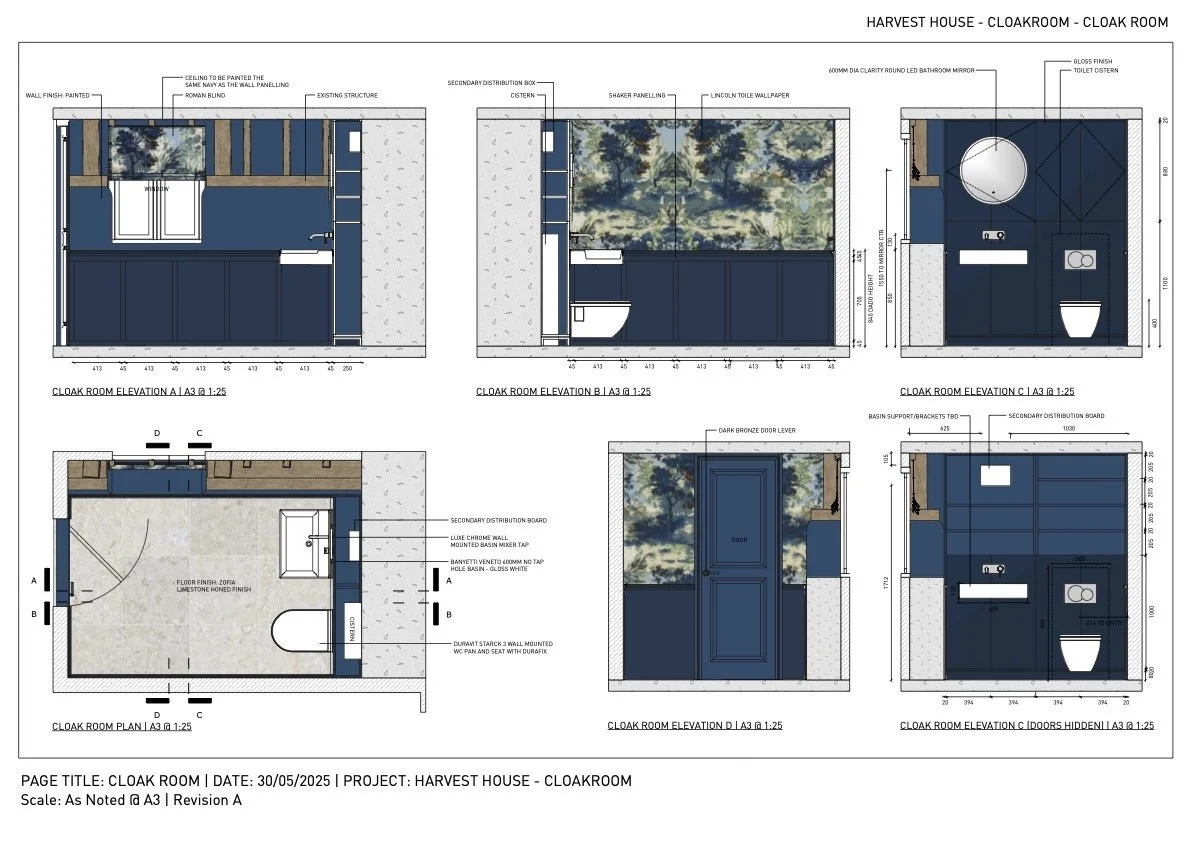
Every project involves a lot of people; Designers, Engineers, Architects, contractors, electricians, plumbers, joiners, decorators, suppliers and homeowners who all need to understand what is being built.
CAD drawings create a common language between them.Rather than relying on conversations, assumptions or memory, everyone can refer back to the same information. A dimension on a drawing doesn't change depending on who's reading it. That's why accurate interior drawings are so valuable. They remove ambiguity and help ensure the finished result reflects the original design intent.
Most budget overruns don't happen because somebody intentionally spends too much money. They happen because issues are discovered too late. Perhaps a piece of furniture doesn't fit through a doorway. A drainage run clashes with structural elements. A lighting design doesn't work with the ceiling construction. A bespoke joinery item requires redesign after manufacture has started.
These aren't dramatic mistakes, they're coordination issues. The more thoroughly a project is planned, the earlier these issues are identified, and problems discovered on paper are almost always cheaper than problems discovered on site.
Why Interior Architecture Requires More Coordination Than Homeowners Expect
One of the biggest misconceptions about interior design is that it's mainly about aesthetics, when in reality, every design decision affects multiple systems throughout a home.
Move a wall and you may, affect electrical layouts, flooring transitions, furniture arrangements and lighting positions. Change a vanity unit and you may need to rethink plumbing locations, mirror positions, storage requirements and tile setting out. This is where interior architecture and technical documentation become particularly important.
A successful renovation isn't simply a collection of beautiful products. It's a collection of hundreds of interconnected decisions and trades that all need to work together.
Good drawings help make that happen.